
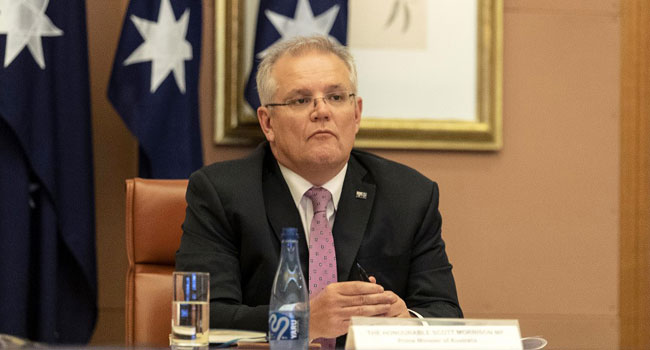
Scott Morrison (C) attends a videoconference with G20 leaders to
discuss the COVID-19 coronavirus, at the Parliament House in
Canberra on March 26, 2020. Gary Ramage / POOL / AFP
Australia’s parliament is set to probe alleged foreign
interference at public universities, a government minister said
Monday, as concerns grow about Chinese influence.
A proposed inquiry by the security and intelligence committee
follows a series of controversies over China’s clout on Australian
campuses, ranging from hacks of university data to questionable
financial donations and intimidation of Beijing’s critics.
Concerns have also been raised about the nature of research
links between academics and scientists in the two countries.
Alan Tudge, the minister for population and cities, told Sky
News the mooted inquiry was the latest government attempt to
tackle spiralling foreign interference now at “levels not seen
since World War II”.
The move comes after Canberra announced last week that it was
seeking new powers to scrap deals between local authorities and
foreign countries that threaten the national interest — sweeping
powers that would extend to universities.
It also comes less than a year after Australia announced new
guidelines for universities for research collaboration,
cybersecurity, and international partnerships.
Tudge said the inquiry would “go further” than previous probes
into alleged foreign interference.
“We need to be assured and the public need to be assured that
there isn’t that foreign interference in our universities sector,”
he said.
(adsbygoogle = window.adsbygoogle || []).push({});
He did not say if the probe was aimed at China.
The Australian newspaper reported that Home Affairs Minister
Peter Dutton outlined the terms of reference for the inquiry in a
letter Sunday to committee head Andrew Hastie, a government
parliamentarian and outspoken China critic.
Advisors to Dutton did not respond to a request for comment.
The university guidelines announced in November push public
institutions to enhance cybersecurity systems, undertake due
diligence before signing partnerships with overseas organisations,
and train staff to recognise foreign influence attempts.
Academics have been urged to be wary of sharing knowledge on
sensitive topics and discern how joint research with international
scholars could potentially be misused.
Schools and government officials also committed to more
intensive consultation to protect Australia’s national
interests.
Beijing has repeatedly denied interfering in Australian campus
life.
China-Australia relations have reached a new ebb in recent
months, with the two governments at loggerheads over trade and
competing for influence in the Pacific.
Tensions spiked in April when Australia infuriated China by
calling for an independent probe into the origins of the
coronavirus pandemic, which emerged in the Chinese city of Wuhan
late last year.
AFP