
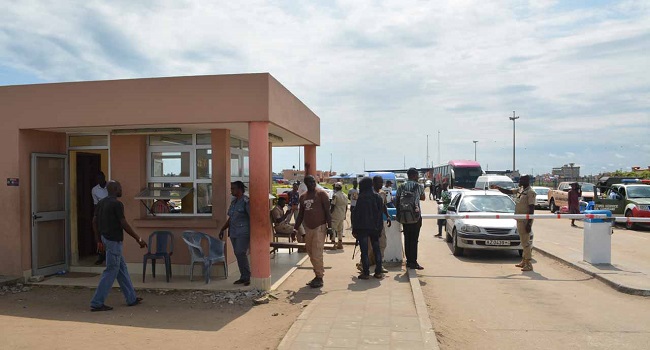
The main border crossing between Benin and Nigeria was
buzzing following the announcement it would reopen after more than
16 months, relieving thousands who suffered from the
closure.
Nigeria said Wednesday it was lifting the closure of its borders
with neighbouring Benin and Niger imposed in August 2019 in a move
it said would curb the smuggling of rice and other commodities and
bolster domestic agriculture.
Early Thursday, traders, taxi-drivers and goods carriers amassed
on both sides of the Seme-Krake border, located along the Atlantic
Ocean.
“I am so emotional I want to cry,” said Jacqueline Watchinou, a
reseller who had to pick up work as a house cleaner to support her
family.
“Last night we had a party to celebrate,” she said, hoping the
reopening would put an end to her financial troubles.
In the town’s small restaurants, people cheered joyfully, as
women nearby draped in colourful clothes brought wooden chairs to
sit on and wait.
A handful of people were able to cross but “this morning,
Nigerians apparently stopped letting people through,” said a
worried trader, Brice Biokou.
A Beninese border official told AFP they were waiting for “an
official notification” to fully reopen.
President Muhammadu Buhari stunned his country’s neighbours when
he unexpectedly closed the borders, saying the time had come to
crush the contraband trade.
Major impact
The unilateral move was criticised for violating commercial and
freedom of movement treaties signed under the Economic Community of
West African States (ECOWAS).
(adsbygoogle = window.adsbygoogle || []).push({});
The closure had a major impact on Nigeria, heavily reliant on
imports to feed a booming population of some 200 million
people.
Huge quantities of frozen chicken, rice, fabric but also cars
that arrive in Cotonou are shipped or smuggled into Nigeria.
For its part, Benin relies heavily on cheap oil imports from its
neighbour, sold across the country in jerry cans along the
roads.
The shutdown also had an impact on traders in Benin, a key
exporter of foodstuffs to Africa’s most populous country.
With a recession on its hands, falling oil prices and an economy
hit by the coronavirus pandemic, Nigeria was under pressure to
reopen its borders.
Four border crossings were to “open immediately”, Finance
Minister Zainab Ahmed said Wednesday: Seme, Ilela, Maitagari and
Mfun.
“The remaining borders are directed to be reopened on or before
31st of December, 2020,” Ahmed said in a statement.
Under the new instructions, the ban on rice and poultry imports
remains in place.
But even so, many in Seme-Krake, are hopeful that business will
soon resume.
“I’m eager to start shipping my goods to Nigeria,” Midonignon
Agbogninoi, who has been transporting goods across the border for
22 years.
“I’m thrilled. I’ve heard everything would be in order by the
end of the day.”
Read more https://swordpress.com.ng/2020/12/18/benin-traders-anxious-for-nigerias-borders-to-reopen/